

There is a problem with listening. It isn't new, and we can't entirely blame Spotify, TikTok or mobile phones. We hear things all the time, but hearing isn't the same as listening. To listen is to stay with the music—to follow where it goes and let what unfolds matter.

Attentive Listener
A song has always had to compete with the person sitting beside us, the bus we're about to miss, the person we hope will call, and the person we hope won't. What has changed is the scale of the competition for our attention—and how easily everything now competes for it. The world competing with music now lives inside the same device through which we hear it.
Radio had already changed the circumstances of listening long before the smartphone. From the 1930s onwards, music entered homes on a scale that would have been difficult to imagine a generation earlier. People gathered around the radio for specific programmes or listened while doing housework, reading the paper, and carrying out other daily tasks. Music could be the centre of attention or simply another presence in the room. The question of whether we were truly listening has been there since recorded and broadcast music could first reach us.
Now almost every distraction can arrive on the same device. Messages, emails, news from six continents, photographs of people we barely know, and videos of cats doing improbable things can all sit alongside the song. We can leave one thing before we've experienced it and move towards another before we've discovered whether it has anything to offer us.
Musicians have always understood, in their different ways, that attention must be earned. Volume can overwhelm a room. Rhythm can set a pulse the body begins to anticipate, so even a small change feels significant. Repetition can give us something familiar enough to recognise, then alter it just enough to make us listen again.
And then there are voices that seem to bypass these mechanisms altogether: voices with such particularity, vulnerability or force that we experience the unsettling sensation of being addressed. We listen because the singer appears to say something that could not quite have been said by anyone else.
That is one reason I keep returning to singers. Before I know what a song is about, I may already feel that the voice carrying it has something to say to me. It might be a roughness in the sound, a hesitation before a phrase, or the way a note seems to darken as it is sustained. The feeling arrives before the explanation, and sometimes the explanation never quite catches up.
Elvis Presley's first recording offers a compelling example. In July 1953, eighteen-year-old Presley visited the Memphis Recording Service and recorded a private acetate of “My Happiness” as a belated birthday present for his mother.

Sam, Elvis and Marion at Memphis Recording Services
Accompanied by his own guitar, Presley sounds young, his voice not yet encumbered by the machinery of fame. It is soft without being insubstantial, with something unexpectedly dark beneath the melody's sweetness. A slight grain in the lower register lends the performance an intimacy that makes it feel less like a performance and more like an overheard moment.
Marion Keisker, working alongside Sam Phillips at his Memphis studio, recognised something in Presley’s voice. She called him a “good ballad singer” with promise. Before he became a star, someone had already heard what set him apart. Musical power lies not only in being heard but in awakening the desire to listen.
I still remember the first time I heard David Bowie's “Life on Mars?” It grabbed my attention, though I couldn't explain why such a wildly strange song should feel so intimate.
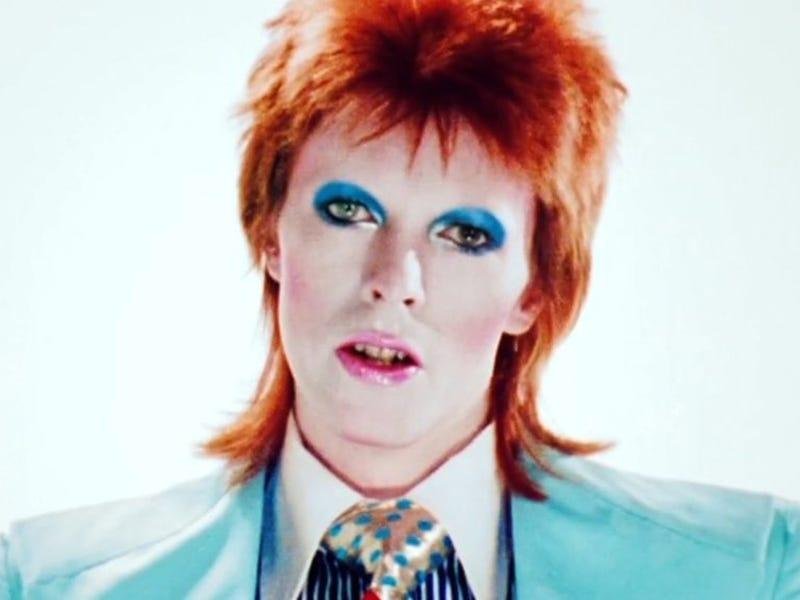
Bowie: Is there Life on Mars Outfit
The lyrics resist a single, coherent narrative. We move through a girl with mousy hair, a cinema, sailors fighting, a lawman beating up the wrong man, and a world of spectacle and confusion. The scenes arrive as though we're flicking through channels, only to find that none offers much comfort.
Bowie seems to have understood that sometimes you need a lack of restraint, because ordinary language, arrangements, and expectations are simply inadequate for the job. Sometimes a person is unhappy in a way that requires an orchestra. Sometimes the world is so disappointing that a piano ballad won't do. You need the strings, the strange images, the enormous voice. You need a song willing to be foolish in pursuit of something beautiful. The spectacle is laughably silly, yet somehow it maintains a thread back to our own lives; it doesn't end up feeling abstractly irrelevant.
The song doesn't feel random. Rick Wakeman's piano introduction is poised and almost formal, building expectation before Bowie's voice enters with theatrical assurance and emotional strain. The music gives us a point of orientation, but the words lead us into a world that refuses to settle. It's funny, grand, and ridiculous, yet something about it is wonderfully perplexing. The words feel so right, yet they are also so provocative. Bowie seems to be looking at the strange things people do, the violence and stupidity they accept, and wondering why this has come to seem normal. The absurdity is not simply in the people themselves; it is in how their behaviour has become something we watch, repeat, and accept without much question.
As the song unfolds, Mick Ronson's strings broaden the sound, lending it an almost cinematic grandeur. The music seems to move towards a revelation, yet the lyrics offer no neat conclusion. The more expansive the arrangement becomes, the more striking the uncertainty feels.
Life on Mars feels prophetic. We have more ways than ever to fill our days, accumulate opinions and watch other people experience life, until we risk mistaking all this activity for a life. Meanwhile, we search the universe for evidence that we are not alone, wondering whether life might exist on Mars. But in our eagerness to discover life elsewhere, are we paying attention to the life we are actually living here?
Lennon’s “Mind Games” gets under my skin in a different way.
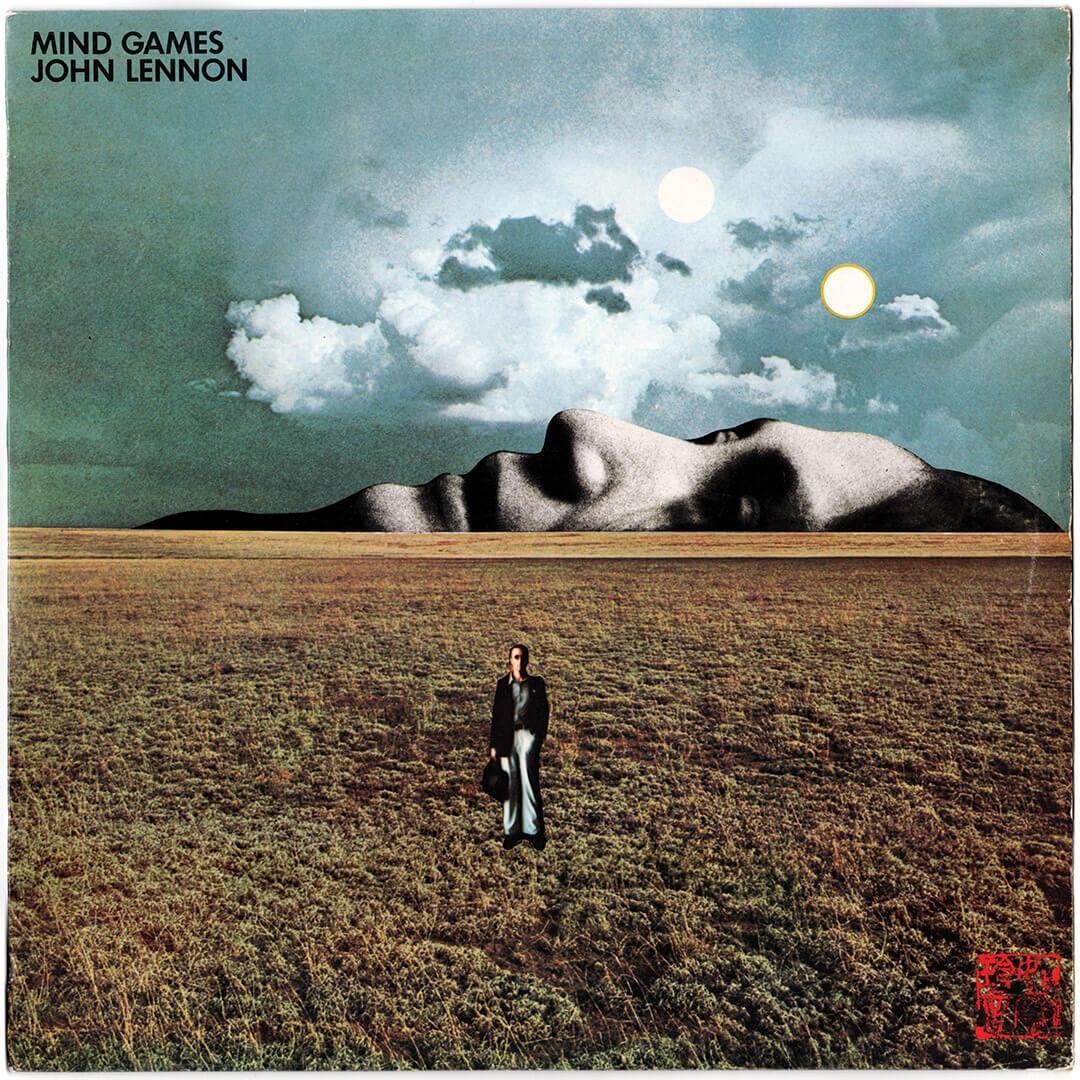
Mind Games Record Cover
Something so open and inviting about its melody makes me relax into it before I've decided whether I believe a word of what it says. Then the idealism catches up with me. Lennon sings about love, faith and the possibility of changing the world by changing the way we think, and I feel a mixture of longing and embarrassment: longing for a world in which such ideas might be enough, and embarrassment at how I have learnt to distrust them.
The repeated phrases stay with me. I find myself turning them over in my head, as if repetition might make them easier to believe, or at least harder to dismiss. Perhaps that is part of the song’s appeal: it offers reassurance without quite letting me settle into it. Even its title makes me hesitate. Mind games can mean imagination, the freedom to picture a world beyond the one we have made. But they can also mean manipulation, the private stories we invent to excuse ourselves, and the ways fear and resentment disguise themselves as common sense.
I recognise that contradiction in myself. It is easier to believe in love as an abstract principle than to practise it when I am tired, irritated, or convinced I am right. It is easier to imagine a better world than to examine the small, everyday ways I help make this one worse. The mind can offer hope as a starting point, but it can also provide an endless supply of reasons not to change. By the end of the song, I am left wondering whether its idealism is naïve or necessary. Perhaps hope is not about believing people are better than they are, but about refusing to accept that they must remain as they are.
Nina Simone’s performance of “Stars”, written by Janis Ian, resonates deeply with me as an expression of our need to be loved, recognised and understood.
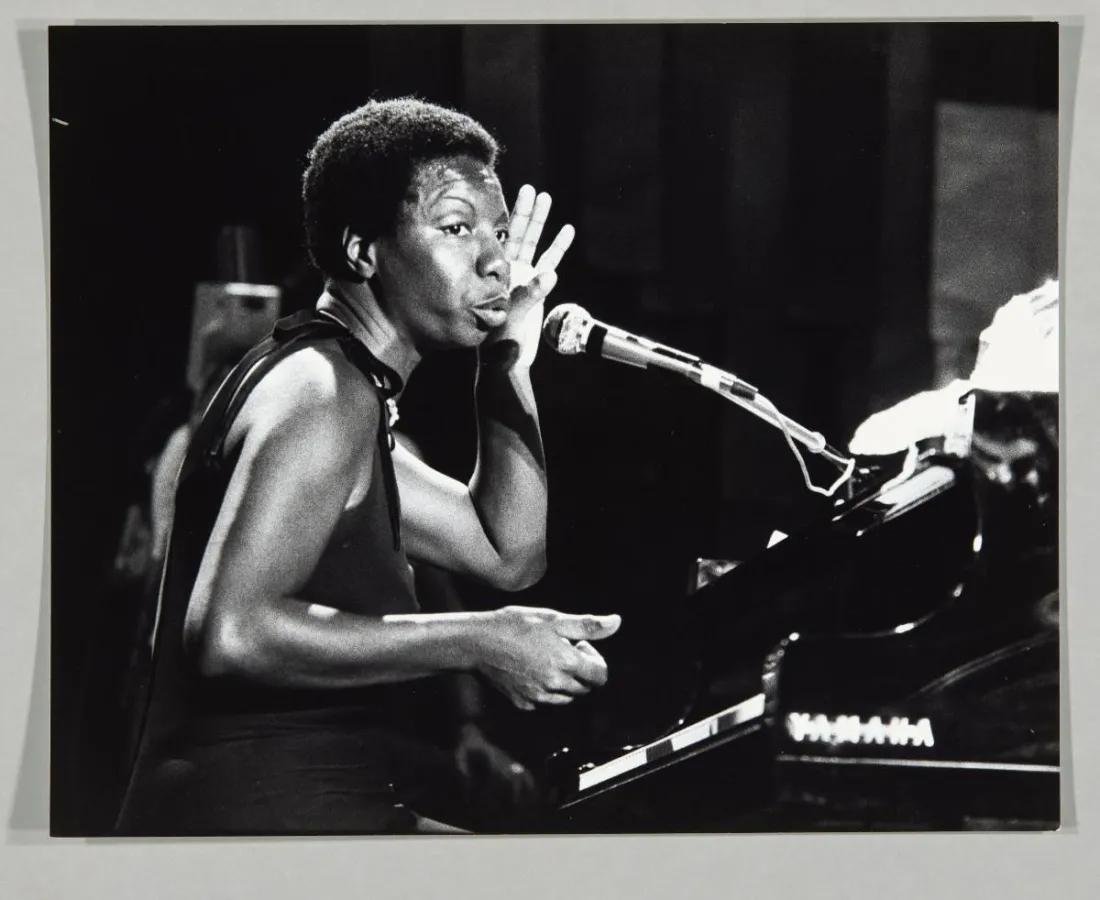
Simone at Montreux
Although the song explores the costs of fame, I hear something more intimate in Simone’s interpretation: the longing to matter to someone, not merely to be admired by many. It makes me reflect on the difference between being noticed and truly seen.
Simone’s performance rewards patient listening. She allows the words to unfold at their own pace, moving between singing and something closer to conversational speech. Her pauses, hesitations and subtle shifts in emphasis make the words feel like thoughts being weighed rather than merely delivered. The restraint of her delivery draws us towards the vulnerability beneath the public voice. Rather than rushing towards a dramatic climax, she lets the emotion accumulate, allowing weariness, tenderness and hurt to emerge in their own time. At times, she seems almost to be thinking aloud, as though the feelings beneath the words are being discovered even as she expresses them. This makes the performance feel less like a declaration and more like a private reckoning with the difference between being admired and being known.
What makes this interpretation so powerful is its emotional complexity. There is weariness, but also tenderness; resignation, yet still a desire for connection. I hear the tension between recognising that admiration cannot guarantee intimacy and hoping for something more enduring. Simone’s voice conveys the vulnerability of wanting to be understood, even as recognition from others may never satisfy that need.
Perhaps what I hear beneath Simone’s weariness is a longing for the comfort of sitting together without needing to fill the silence, for being understood without having to find the right words, and for a hand reaching for ours simply because it knows we need it. These small gestures may never attract an audience, but they can mean more than all the admiration in the world. They remind us that we do not always have to be strong, interesting or accomplished to be worthy of love. Sometimes we just need somewhere to put down our burdens, someone beside whom we can let our guard down, and reassurance that even on the days when we have little to give, we are still wanted, still cherished, still enough.
Yet love asks us to look beyond our need to be understood and recognise another person’s vulnerabilities. We can mistake admiration for care or desire for understanding. To love someone is to see them as they are, not merely as we wish them to be. Being truly seen matters, but so does learning to see.
Perhaps this is what makes Simone’s performance so affecting. Beneath our ambitions and desire to be admired lies the hope of finding someone with whom we no longer need to perform; someone with whom silence is comfortable, vulnerability is met with tenderness, and we are enough. Such love means letting ourselves be seen and realising that, even in our imperfection, we have a place in someone’s heart.
Bowie, Lennon and Simone are very different artists, but each understands that a song can alter the distance between us and the world.
Talk Talk showed me another way to pay attention.

Talk Talk
On Spirit of Eden and Laughing Stock, they often seem to do less, not more. Sounds appear, hover and disappear without telling us exactly how to feel about them. A guitar can sound almost alone, its tone and decay becoming part of the composition rather than merely carrying a melody. A drum can arrive with unexpected force after a passage of near-stillness, changing the emotional character of everything that came before. Their music doesn't fill every available space. That restraint gives the listener time to notice what is present. A pause becomes charged with anticipation; a quiet sound can seem more significant than a louder one because of the space around it. The music trusts the listener to wait.
Big Audio Dynamite offers almost the opposite lesson.
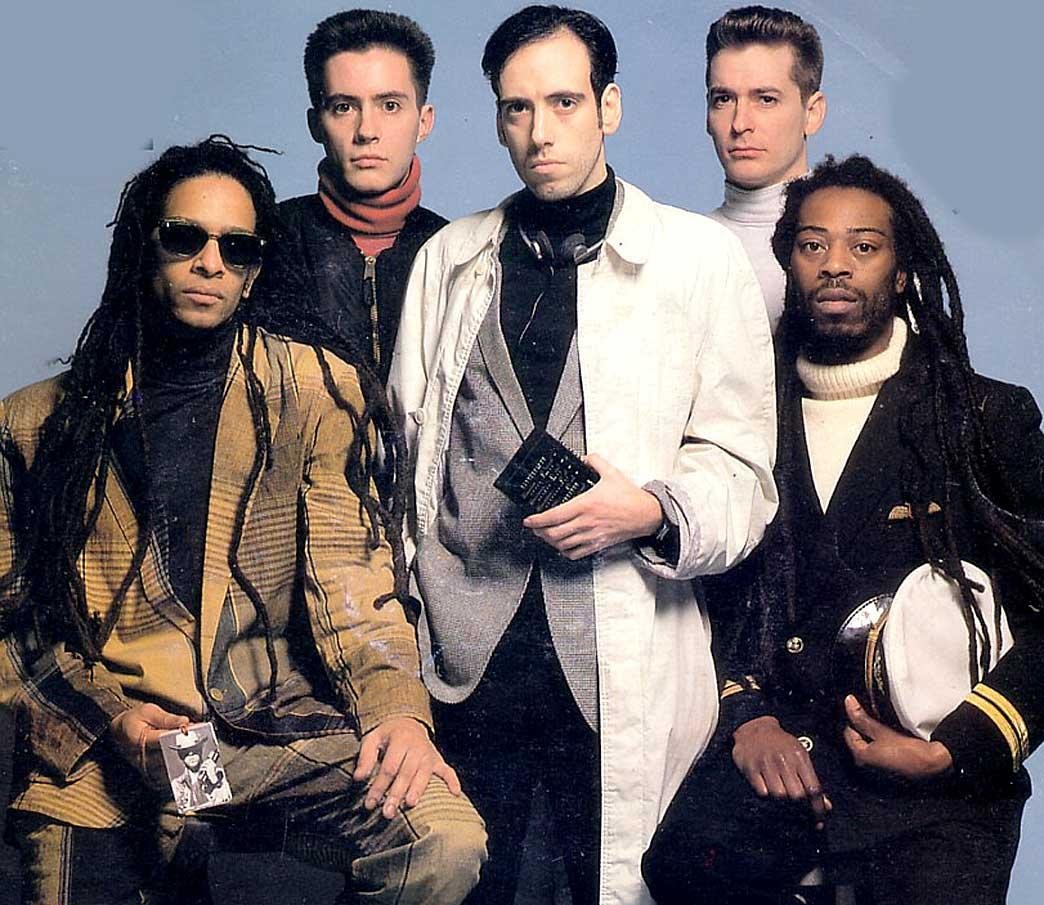
Big Audio Dynamite
Their records bring rock, hip-hop, samples, electronic sounds, and fragments of film and street life into the same space, as if the world outside the studio had been cut into pieces and rearranged on the floor. The music can seem busy, even fragmented, but that busyness creates another kind of attention. Listening to them, I find myself following connections. A rhythm arrives from one place, a voice from another, and a guitar or quotation shifts the meaning of everything around it. Instead of asking the listener to concentrate by removing distractions, the music makes the relationships between distractions interesting. It suggests that attentiveness doesn't always require silence. Sometimes it means learning to notice multiple things at once. One artist leaves space; another fills it. One voice makes us feel we're being addressed; another gives us a puzzle of sounds to follow.
No artist can force attention. They can only create something that makes attention worthwhile.
I used to think listening meant uncovering what an artist had put into a song. Now I think it also means uncovering what time and experience have made available to us. A song can wait years before we are ready to hear it.
Much of contemporary life encourages us to divide our attention, move rapidly between competing demands, and measure experience by how quickly it delivers something new. Music can reproduce that pattern, becoming another stream of content to sample and discard. But it can also interrupt it. A song may hold us through a change of mood, ask us to wait for a resolution or draw us towards a sound whose significance only becomes apparent gradually. It can remind us that not everything meaningful announces its importance immediately, and that some experiences become richer when we stop searching for the next one.
Choosing to stay with a song for a few minutes can therefore feel like a small act of resistance to the assumption that whatever comes next must be more interesting than what is already here.
At their best, musicians can give us a reason to pay attention.
The most moving songs remind us that we can pay attention. And in a world that keeps asking us to look somewhere else, this is an exercise of freedom.