

Part 1:When Bass Went Small: Why the Subwoofer
When Bass Went Small: Why the Subwoofer
Bass has always been the quiet architect of music reproduction, shaping not just how recordings sound, but how they feel. From the 1960s onward, home bass reproduction has changed dramatically, reflecting not only technological advances but shifts in taste, living spaces, and expectations. What once relied on sheer size and physical presence is now often handled by compact systems and specialised components—most notably, the subwoofer.
The journey from large wooden cabinets with 15-inch drivers to small bookshelf speakers paired with discreet bass units tells a broader story about how we live with music—and how we want it to feel.
1960s–1970s: Big Cabinets, Big Bass
In the 1960s and 70s, the rule was simple: deep, convincing low frequencies demanded large speakers. There was no shortcut—physics dictated that moving air at low frequencies requires substantial drivers in heavy enclosures. Classic examples include the JBL L100 and Klipsch Heresy speakers. These weren’t designed to disappear into a room—they were meant to be part of it. Many sat along walls, integrated into cabinetry, or paired with large stereo consoles.
Amplifiers of the era were less powerful than today, so efficiency mattered. Big cabinets helped produce satisfying bass without overtaxing the amp. At the same time, vinyl records imposed limits. Too much low-frequency energy could cause playback issues, so recordings were engineered with controlled bass. The result was warm, full sound—never exaggerated, but deeply satisfying.
1980s: Compact Speakers Rise
The 1980s brought major changes. Amplifiers became more powerful, affordable, and stable thanks to advances in solid-state technology. Smaller drivers could now be used, even if they required more power to achieve the same output. Meanwhile, new driver materials—composites and stiffer cones—allowed manufacturers to push smaller woofers further, producing more bass than their size suggested.
Consumer preferences also shifted. Large speakers started to feel out of place in modern homes. Interior design favoured clean lines and less clutter, while urban apartments demanded smaller, practical solutions. Even a pair of 15-inch floorstanders could overwhelm a compact space. Smaller speakers remained unobtrusive.
Some designs, like the KEF LS3/5A, showed that careful driver alignment and cabinet shape could produce precise imaging and a convincing sense of space. Listeners began to value clarity and soundstaging over sheer bass weight.
1990s: Home Theatre and the Subwoofer
By the 1990s, home theatre changed the game. Films demanded explosions, rumbles, and low-frequency effects that small speakers couldn’t handle alone. Surround sound introduced a dedicated low-frequency effects channel, naturally creating a role for a separate bass speaker—the subwoofer.
The concept of the subwoofer is simple: divide the workload. Main speakers handle midrange and treble; the subwoofer handles the lowest frequencies. This allows each component to be optimised for its task. Small speakers can focus on clarity and imaging, while the subwoofer moves air and delivers deep bass.
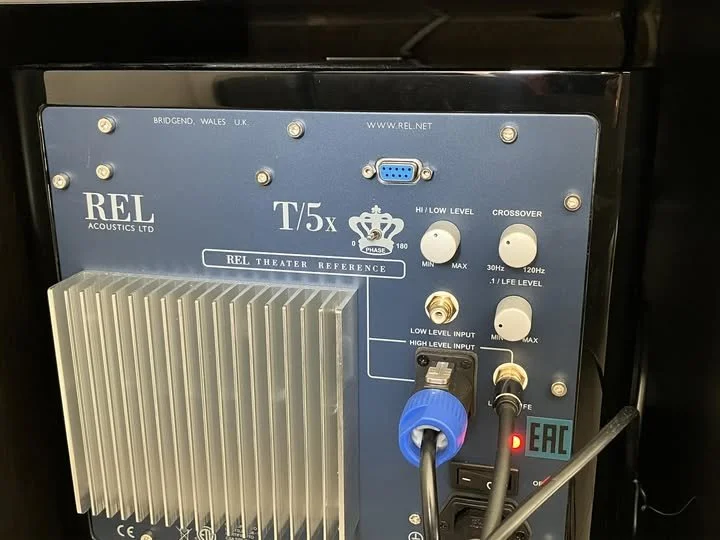
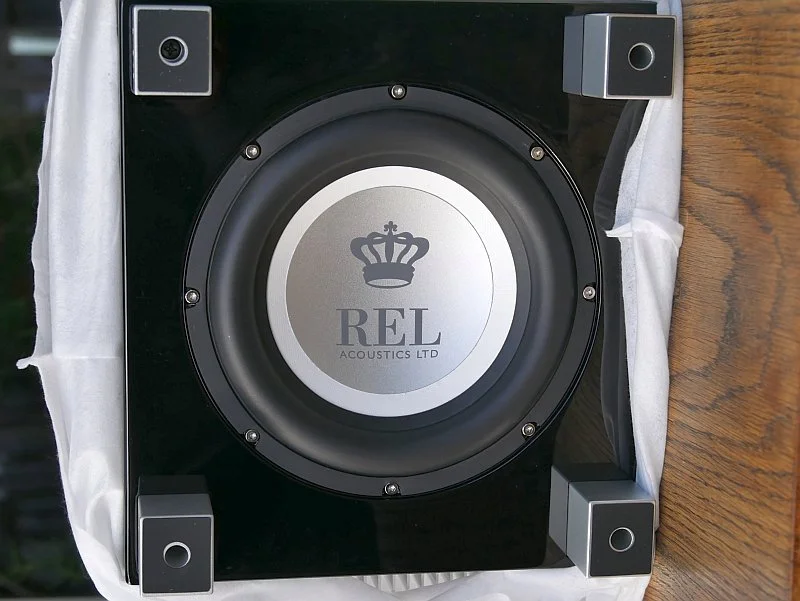
Built-in plate amplifiers made this practical. Integrated amps tailored to the driver and enclosure enabled precise control, equalisation, and bass extension down to 20 Hz or lower. Products like the REL T/5i or SVS SB series show how relatively compact subwoofers can produce room-filling bass.
Make it stand out
Modern subwoofers also simplify setup. Line-level inputs, adjustable crossover points, gain controls, phase switches, and even app-based tuning allowed users to fine-tune sound from their listening position. For many, this combination of compact size, deep bass, and ease of use was a game-changer.
Integration: The Critical Challenge
However, subwoofers introduce new challenges. Integration is key: levels, crossover frequency, and phase must be aligned. Get any of these wrong, and bass may sound disconnected or overpower the system.
Room acoustics complicate matters further. Low frequencies interact strongly with walls and surfaces, creating standing waves. Some notes boom while others disappear. Subwoofer placement is critical—small changes can drastically alter performance. Unlike midrange and treble, which are directional, bass fills the room in unpredictable ways.
Historically, consumers lacked tools to measure room response. Retail demonstrations often masked these problems. Convenience or aesthetics often dictated placement, meaning subs sometimes worked well visually but poorly acoustically.
Trade-offs and Considerations
Not every system benefits from a subwoofer. Well-designed speakers that reach deep frequencies can provide more coherent, natural sound than systems in which a subwoofer dominates. In small rooms, or with music that doesn’t demand extreme bass, a subwoofer may complicate rather than improve the experience.
The shift from large cabinets to small speakers plus subs reflects broader trade-offs: physical solutions gave way to electronic ones, permanence gave way to flexibility, and simplicity gave way to careful integration.
The Importance of Bass
Bass remains fundamental. It underpins rhythm, defines scale, and shapes emotional impact. Whether from a 15-inch woofer in a vintage JBL or a modern, tucked-away subwoofer, its role is vital. The challenge remains: reproduce it in a way that supports the music, rather than dominating it.
When done well, a subwoofer allows small speakers to exceed their apparent limits, revealing depth and detail that might otherwise be lost. The key is balance: weight without muddiness, power without distraction, and clarity without compromise.