

Featured
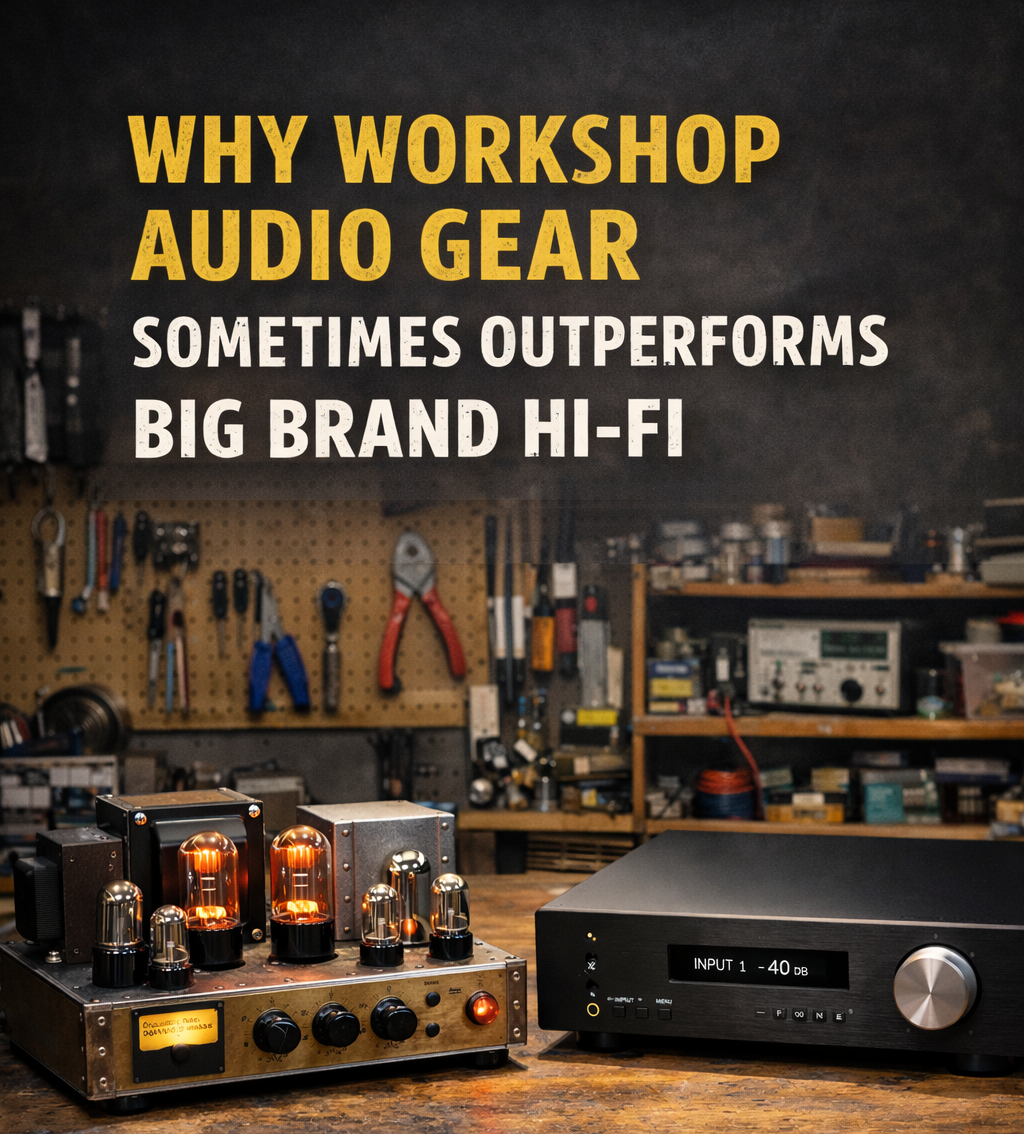
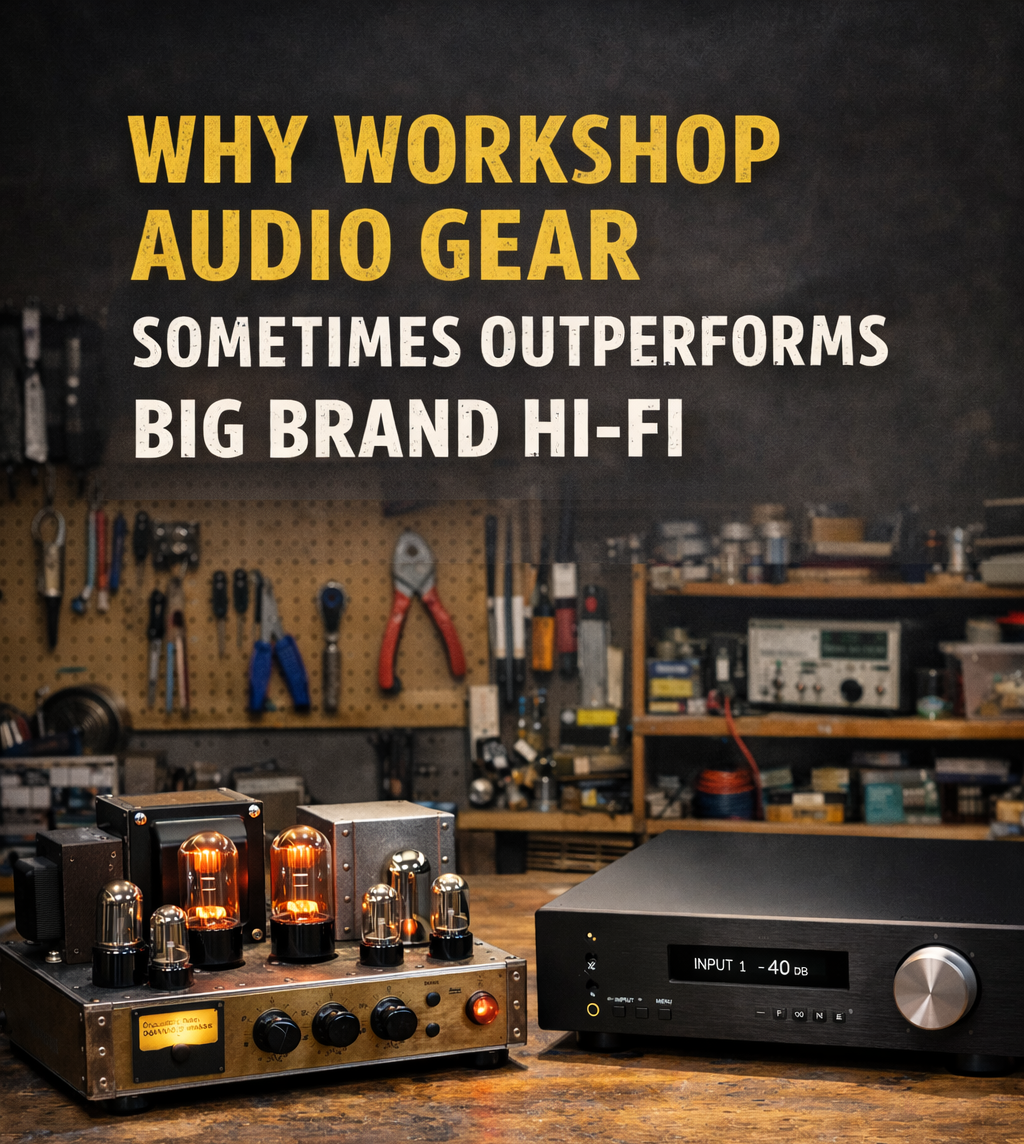


Boutique and workshop audio builders can sometimes outperform big brands because they may have more creative freedom.
However, this creative freedom also brings trade-offs, including variable quality control, uncertain long-term support, limited documentation, and potential compatibility challenges.
Small workshop or DIY audio gear can sometimes outperform big-brand hi-fi because independent builders have the freedom to experiment with unusual designs, specialised components, and hands-on craftsmanship without the commercial constraints faced by large manufacturers.
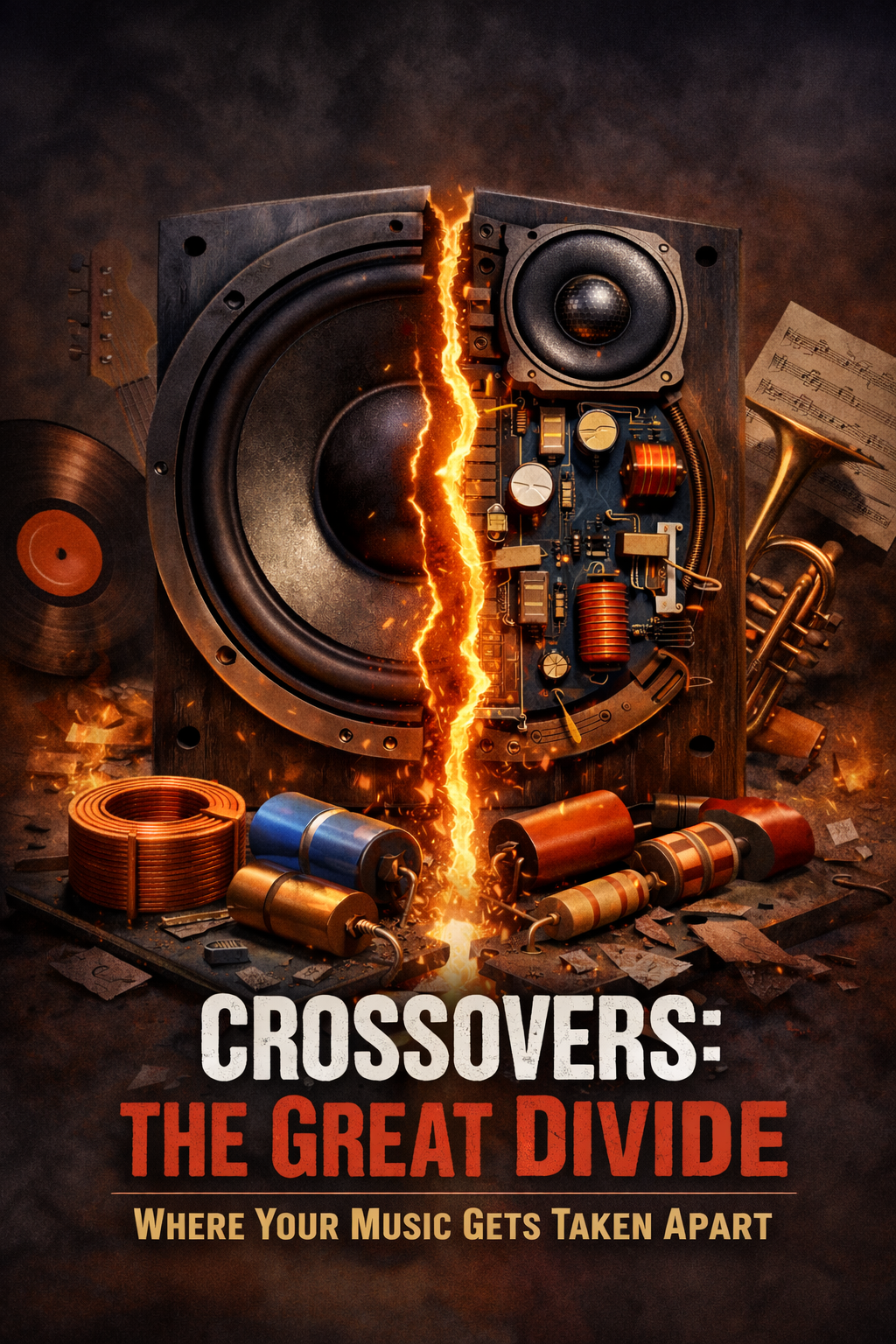
Explores the hidden engineering choices shaping everything you hear.
Crossovers: The Great Divide” shows how a loudspeaker’s crossover shapes what we hear. It divides frequencies among drivers, but this can subtly affect phase, timing, and dynamics. Component choices influence harmonic coherence and microdynamics.
Full-range designs improve coherence but sacrifice bass and scale. A well-made crossover lets drivers integrate seamlessly; a poor one leaves persistent flaws in tone, timing, and dynamics.
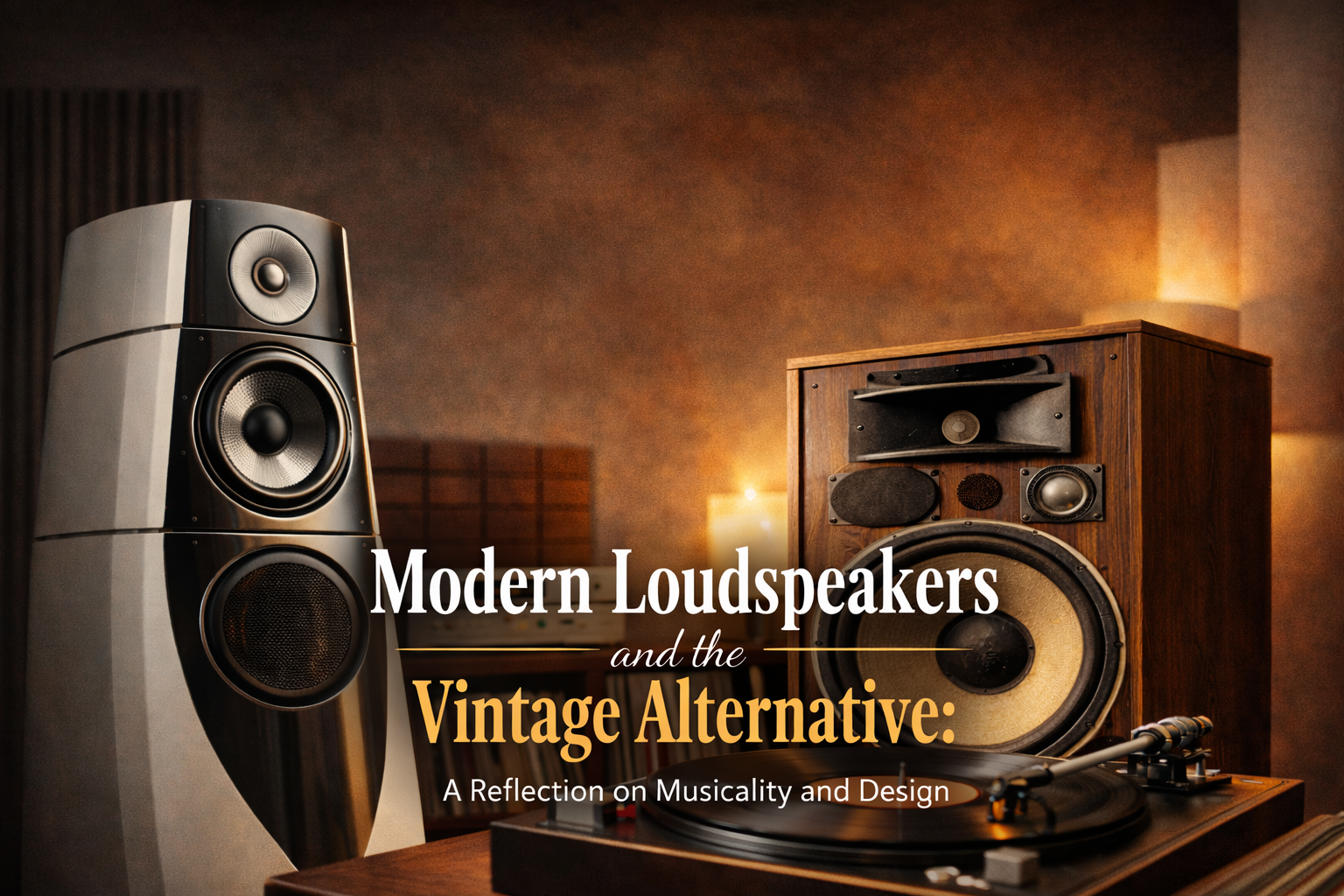
A reflective exploration of how modern loudspeaker design prioritises measurement precision, inert cabinets, and complex crossovers, sometimes at the expense of timing coherence and dynamic ease.
It revisits vintage high-efficiency designs, noting their flaws while examining their strengths in midrange presence, immediacy, and harmonic integrity.
It suggests the divide between old and new is less absolute than assumed, and that musicality may lie in combining the strengths of both approaches.
Listening to music is not passive or a test of equipment; it is an active use of attention. As a song unfolds, so do our memories and expectations, creating a personal structure of listening.
Fidelity alone does not create involvement — attention does. In a distracted world, sustained listening becomes a choice to follow one unfolding event. At its best, music reproduction simply clears space for that focus. When we truly listen, we are not just hearing a song; we are discovering the shape of our own awareness within it.
Committing to an album is a quiet act of resistance. It refuses to let music become just another tab in the background. It means choosing to care for forty minutes.
Even the best system can’t take you to Abbey Road but it can reshape the room you’re in.
You sit still, the music unfolds, and the ordinary space around you grows deeper, warmer, more alive.
We like to say what we have is enough — that a phone and earbuds deliver all the beauty we need — and it feels modern, even virtuous. But we’ve adjusted. We’ve grown used to music that lives inside our heads, that never moves air or fills a room. Grandeur shrinks to skull-size. “Fine” replaces beautiful.
Two speakers in a room do what earbuds cannot: they return music to space.
The Album: Music That Unfolds in Its Own Time celebrates listening slowly and deliberately.
Some records—like Matt Steady’s atmospheric landscapes or Fleetwood Mac’s Rumours—aren’t just collections of songs but carefully constructed worlds. They reveal themselves only if you resist the urge to cherry-pick.
Technical measurements—bass, treble, imaging—only tell part of the story. Music is relational and dynamic, shaped by melody, harmony, rhythm, timbre, and silence.
A system that reproduces these interactions holistically preserves structure, nuance, and flow, letting listeners follow phrasing, dialogue, and subtle interpretation.
True fidelity is not about decibels or extension but meaning. The best systems make music intelligible, cumulative, and transformative.