

Beyond Thump and Tizz:
The Tyranny of Frequency Extension in Hi-Fi
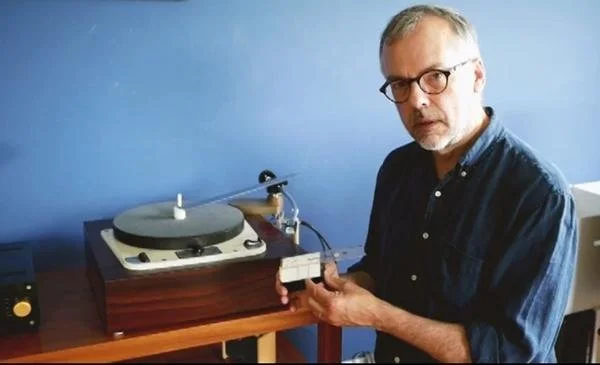
Art Dudley
The late Art Dudley knew a sound that grabs you in all the wrong ways, demanding attention before the music has a chance. A system whose bass thumps and treble tizzes so insistently that the music itself doesn’t get a look in.
At first, it feels thrilling. The bass stomps as if it owns the room. The treble sparkles in a metallic, edgy way, as though each note has been etched into the air itself.” For a few seconds, you can’t help but pay attention. And then you wonder why you’re not listening to anything.
Dudley didn’t trust that moment.
He had a way of naming things so plainly that you wanted to slap your forehead and say, Of course. When he wrote about “the tyranny of the frequency extremes,” he wasn’t attacking bass or treble per se—they’ve always been part of the fun—but the obsession with extension as proof of quality. Lower, higher, cleaner, flatter. Specs standing in for experience. He once said, with a kind of dry exasperation, “Audiophiles are easily impressed, and often by the wrong things.”
Sure, the bass hits hard. You feel it in your chest, pounding the floor. But if it’s muddy or arrives a fraction late, it erodes the meaning of the music—you might sense the rhythm, but phrasing, pulse, and emotional nuance start to slip away. Treble can sparkle and spray, with metallic sounds that demand attention. But if it’s disconnected from the notes, it’s not music—it’s decoration, detail without meaning.
The real heart of the sound, Dudley reminded us, lives in the middle. Voices, strings, woodwinds, and brass—everything with texture, weight, and expressive nuance—occupy this midrange, anchored in the mid-bass, where timing and phrasing come alive. Get it right, and a system with quirks elsewhere can still convey music that feels real. Get it wrong, and no amount of thump or tizz can save it. The music loses coherence, and the listener loses the connection.
This is where coherency matters. Dudley saw it not as a flat frequency response, but as a system behaving like a single instrument: sounds start and stop together, harmonics stay intact, nothing calls attention to itself. “Music is one thing happening,” he said repeatedly, “not many things happening at once.”
When coherency is absent, the seams show: bass drifts from pitch, midrange loses density, treble floats like commentary rather than content. The illusion of real musicians in a real space quietly collapses.
Achieving this coherence is difficult. It requires restraint, alignment, and integration—not just flat response or extreme extension. Crossovers introduce phase issues; multiple drivers must be timed, not just tuned. Feedback can flatten life as well as response. Dudley admired designers who accepted limits to preserve unity.
That’s why he favoured simpler systems: fewer promises, but the right ones. “I don’t mind less,” he seemed to say, “if what I get makes sense.” Less thump, if it speaks clearly. Less tizz, if it belongs to the instrument producing it.
Frequency extremes weren’t unimportant. But Dudley refused to elevate them above everything else. Extension should emerge naturally from a coherent, musically grounded system—not be chased in isolation. When priorities are inverted, systems dazzle briefly and disappoint slowly.
And that explains who he was really writing for. Not labs. Not spreadsheets. Music lovers. People who sit down at night, drop a record, and care about what it feels like when the music starts. That was always his measure: not how far down it went, not how high it reached, but whether it made you reach for the next record.
The tyranny of the frequency extremes is, at heart, a reminder: don’t be distracted by thump and tizz. Remember the middle. Remember coherency. Remember what makes reproduced music feel real, lifelike, and utterly worth returning to.