

Why Music Matters: The Night Midnight Oil Understood Our Generation
The first time I really heard Midnight Oil, the economy was falling apart around us.
It must have been sometime in 1981. Jobs were scarce, interest rates were climbing past numbers that sounded fictional, and the future teachers had promised us, steady work, a mortgage, maybe a second-hand Holden in the driveway, had disappeared. Instead, adulthood arrived like a landlord knocking on the door before you’d even finished breakfast.
Most mornings began the same way: the classifieds spread across the kitchen table like a losing lottery ticket. You circled advertisements for factory hands, store assistants, warehouse labourers—positions that wanted experience you didn’t have and paid wages that barely covered rent anyway. Sometimes you rode your bike across town to line up outside a factory gate with fifty other hopeful young blokes. The foreman would appear, glance down the queue, pick two people who looked sturdy enough to lift something heavy, and disappear again.
The rest of us drifted home.
“In those cramped, frustrating days dragging around an anger you didn’t know what to do with Midnight Oil started appearing everywhere: on cheap cassettes, battered radios, in smoky lounge rooms where someone’s older brother kept a battered record collection.”
The first time I heard them properly was in a friend’s living room. The carpet smelled of damp and stale cigarettes, and the record player looked like it had survived a small electrical fire. Someone dropped the needle onto an album—maybe Place Without a Postcard, maybe 10, 9, 8, 7, 6, 5, 4, 3, 2, 1.
Suddenly, the room filled with a restless, furious sound.I
The guitars sounded like machinery starting up in a factory that had been closed for years. The bass sounded like someone pounding on a locked door, and then there was the voice of Peter Garrett.
Garrett didn’t really sing so much as accuse.
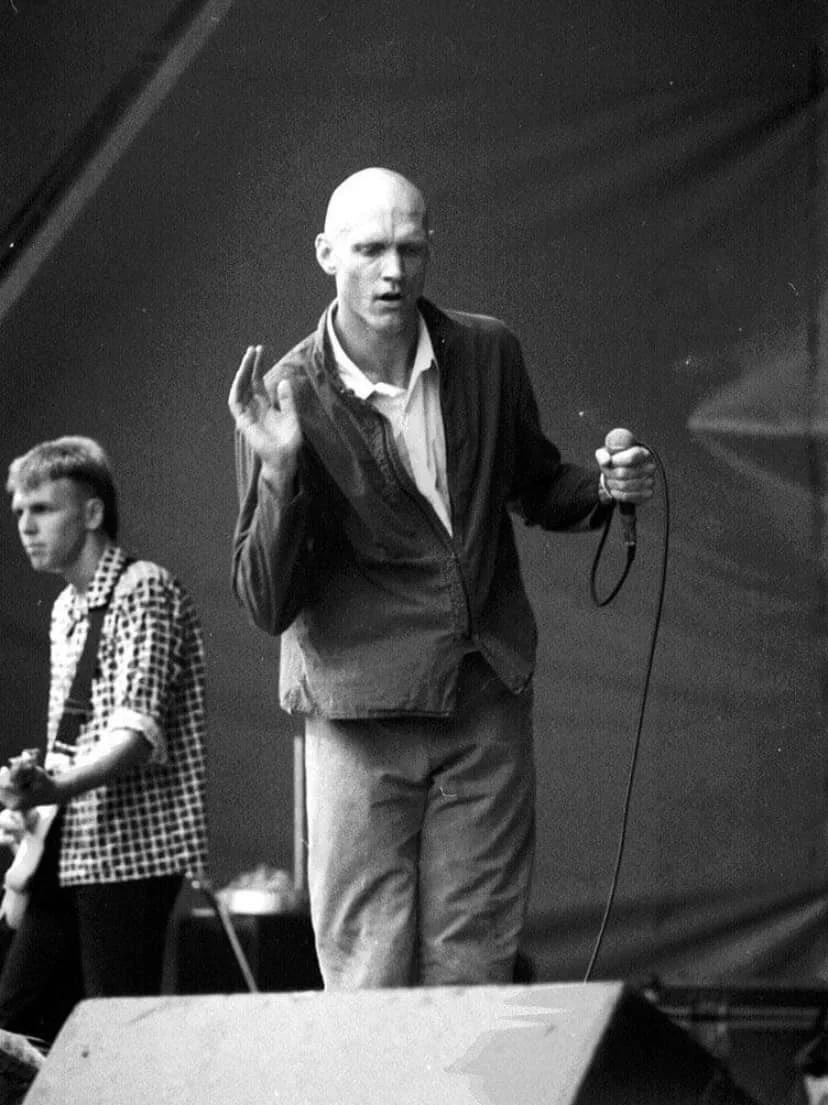
That was the first thing that made Midnight Oil different. Plenty of bands were loud. Plenty of bands were political. But Midnight Oil sounded like they had actually been standing in the same unemployment lines as the rest of us. Their songs didn’t feel like distant commentary. They felt sincere and real, and now that might sound clichéd, but actually it wasn’t.
You’d hear a track like “Power and the Passion” or “US Forces” crackle through a cheap radio while you waited outside a factory gate, and suddenly the morning made a strange kind of sense.
“The righteous calling out what's going down meant someone else knew a little of what it was like to feel unimportant, a little more than a number.”
Eventually, word spread that the band was playing a nearby show. Tickets weren’t exactly cheap if your income consisted mostly of odd jobs and loose change found in couch cushions, but if you skipped meals for a week and borrowed a few dollars from a mate, it was just about possible.
Which is exactly what many of us did.
The venue was the kind of place that probably violated half a dozen fire regulations. It smelled strongly of beer and sweat, and the toilets looked like they hadn’t been cleaned since the Gough Whitlam government. The floor was sticky. The lighting was terrible.
The crowd looked exactly like the people you’d expect to see in an unemployment queue. Blokes in worn boots. Women in faded jackets. Students beginning to suspect that their degrees might not be the golden ticket they’d been promised.
No silk shirts.
No carefully arranged hairstyles.
Just people who had scraped together enough cash for one loud night.
Then the band walked onstage, and the audience leaned forward.
Garrett was unlike any frontman anyone had seen before. Tall, bald, angular, moving in strange, convulsive bursts.
Rock stars at the time were supposed to look bored and seductive, as if they’d been interrupted while reading philosophy.
Garrett looked furious.
Not theatrical fury, either. Real fury. The kind you recognised from late-night arguments about rent, wages, and why everything seemed stacked against you.
The band launched into a song—probably “Power and the Passion”—and the entire room erupted.
People didn’t dance so much as surge.
Every chorus became a shout. It felt less like a concert and more like a town meeting conducted at maximum volume. Guitars roared. The drums sounded less like music and more like a hundred people bashing on the same locked door.” Garrett hurled himself across the stage as if the floor were electrified.
And then, between songs, he spoke.
This was the moment that made the night unforgettable.
He didn’t deliver the usual rock-band lines about how wonderful the audience was. Instead, he talked about uranium mining. About land rights. About the way economic policies were always designed by people who never had to line up outside a factory gate at six in the morning.
He talked about Indigenous land struggles—issues many of us had barely heard discussed in public before.
And the remarkable thing was how quickly the crowd understood.
Songs like “US Forces” suddenly felt less like political statements and more like explanations—connecting headlines, protests, job queues, and the uneasy suspicion that the system had been built for someone else entirely.
At one point, Garrett paused, wiped sweat from his face, and looked out at the crowd.
“I know a lot of you are doing it tough right now,” he said. It was a simple sentence. But it was something nobody in authority ever seemed to say.
Politicians talked about “economic adjustments.” Bank managers talked about “interest rate settings.” Employers talked about “market conditions.”
Nobody ever said: This is tough and it’s happening to you.
But here was a band saying exactly that.
The reaction was immediate.
“It wasn’t just cheering. It was something deeper—a kind of collective exhale. People lifted their heads. Someone near the front punched the air and shouted, “Bloody oath.” Others laughed, the rough, relieved laugh you hear when someone finally says what everyone has been thinking.”
For a moment, the frustration that had been building for years became communal rather than private.
At some point during the night, Garrett climbed down into the crowd, towering above everyone like a furious lighthouse while people grabbed his shoulders and sang along.
It was chaotic.
Glorious chaos.
And the strange thing was, it felt purposeful. Like the noise itself mattered.
When the encore ended, the lights came up slowly—the slightly cruel moment when you notice the sticky floors and empty beer cups again.
Outside, the cool night air felt almost shocking after the heat inside.
Reality was still waiting.
The interest rates were still obscene. The job market was still brutal. Tomorrow morning the classifieds would still be sitting on the kitchen table like a list of doors that refused to open.
None of that had changed.
But something else had.
Walking home with your ears ringing, you felt lighter—not because the problems had disappeared, but because someone had finally acknowledged them out loud.
Midnight Oil hadn’t solved anything.
They’d done something more important.
They’d taken the anger people carried quietly and turned it into something loud enough that the whole room could hear.
And for a generation stuck in the economic gloom, sometimes that was enough.
Enough to get up the next morning.
Enough to keep looking.
Enough to believe that making real noise might eventually make the world listen.